Achievements
Establishment of Safe House
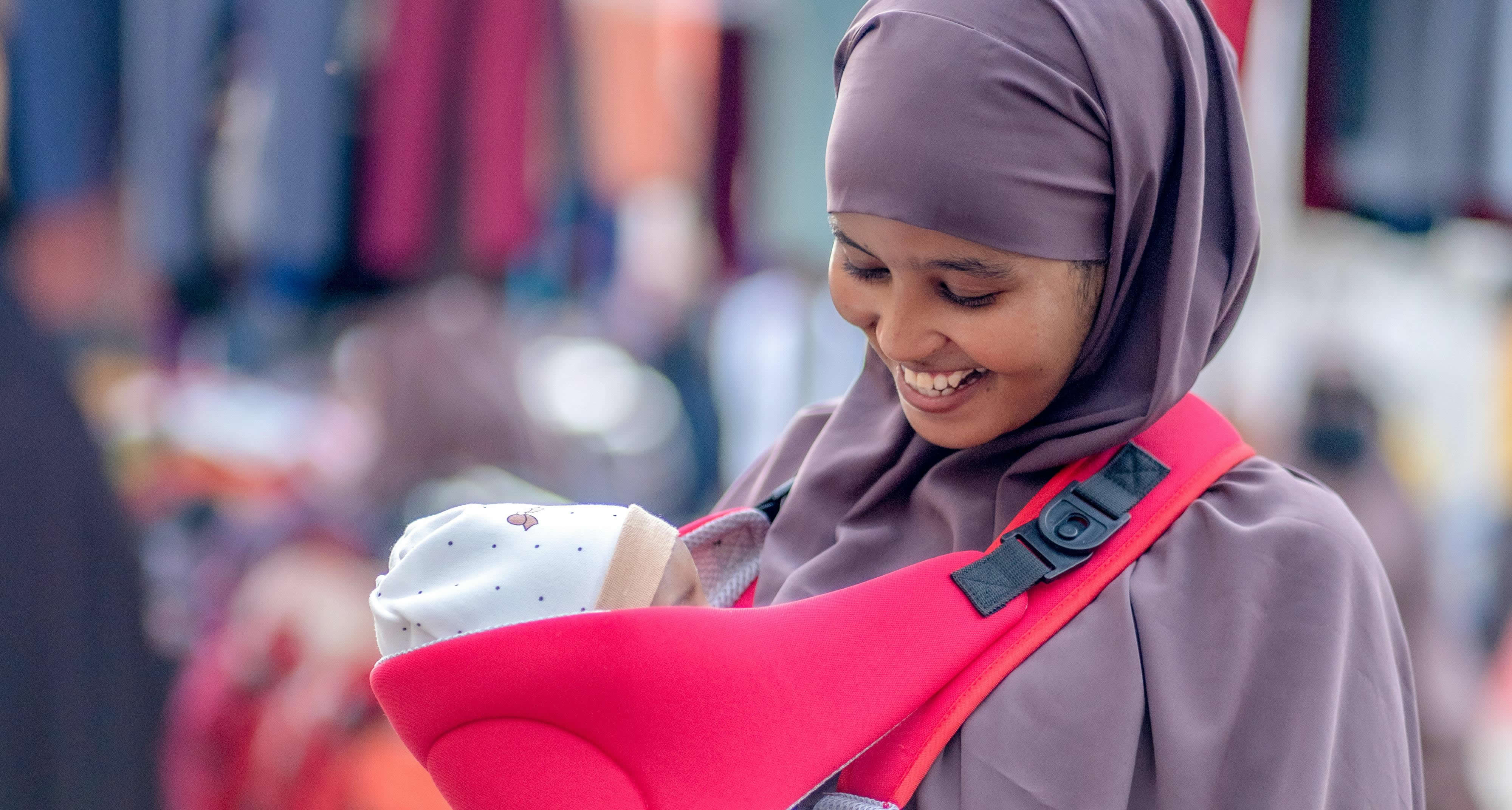
With support from UNFPA SWACEDA established a safe house in dhusamareeb. The safe house has been in existence since August 2016 to date. It has 2 rooms, one for female survivors and the other for male survivors.
Survivors stay at the safe house after getting medical assistance when it is too unsafe for them to go back home after experiencing GBV. Once it was up and running the working group agreed to run it in turns. It continues to operational.
Establishment of GBV, FGM and CMR working group.
In 2015 we proposed to the national GBV working group that we establish a working group on GBV, FGM and CMR as the regions were very far from the capital, Mogadishu where all meetings were happening.
This was approved and in consultation with the local government and aid workers on the ground we established a working group of all the 15 civil societies on the ground and we developed together a response plan with each undertaking their area of operation. SWACEDA chaired until 2017 but after building capacity of the working groups chair is now done on a rotational basis.
Trainings
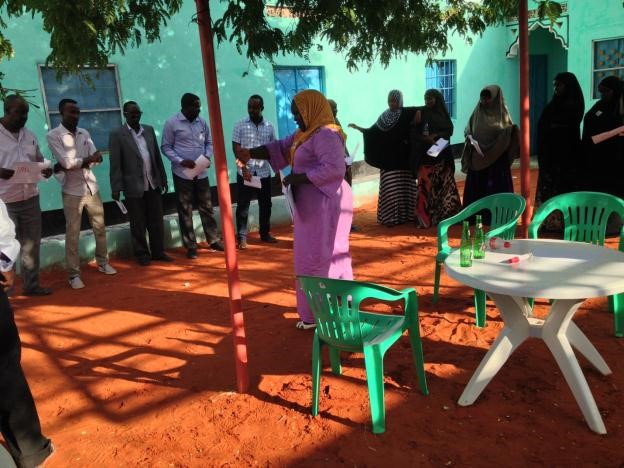
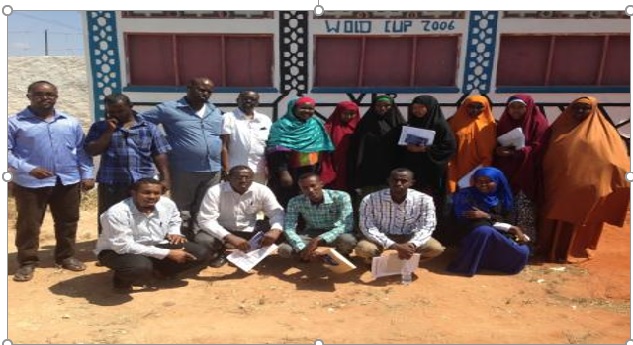
SWACEDA conducted training on various community approaches that facilitated understanding power dynamics, gender relations and community dialogue. In the 2 Dollows 0f Somalia and Ethiopia SWACEDA conducted community conversation of 15 sessions of 30 groups each between 2016 and 2018 in a project funded by IOM.
Even though the communities on either side of Dollows are Somalis power dimensions were understood differently with those in Ethiopia being more biased towards stronger male dominations. This provided a framework for future programming. The discussions easily paved the way for social norms discussions. Through the community conversations communities gained deep insights to the reasons societies undertook those norms and that they were traditions that were just repeated over time.
Most young people realize the lack of importance and relevance. Enough funding would have allowed for development, awareness and adaptation of counter new norms.
Radio Programme
In 2018 in Dollow Somalia and Ethiopia, Kismayo and Galgaduud we conducted radio programmes that were on GBV prevention and response including the awareness raising on the case management process and who does what on the response plan. Common key messages especially on FGM developed by the GBV working group were guiding panelists which included religious leaders, GBV expert from the working group, a women leader, a police officer and someone from the judiciary. Consolidated messages guided on terminology especially on so called “Sunnah”. The radio programmes also had live calls in sessions where the public asked questions to the panelists. This project was funded by UNFPA.
Radio listening sessions
During the radio programmes, radios were mounted in markets, livestock watering points, selected estates and would be listened to by members of the public. This would be replayed again. One Monday would be the live programme and another the repeat. This activity is really effective as Somalis are oral communities. Also radio is continues to be viewed as an
authoritative and in most cases you find communities are using the radio discussion to support or counter their arguments. If long term funding is available radio is one of the most
effective ways.